Entering the grove…
A growing archive of pagan, nature-based, and megalithic wisdom. Freely accessible to all who seek.
Browse All ArticlesBrowse by Topic
Nature Philosophy
Humanity's relationship with the living world.
Seasonal Cycles
The eight festivals and the turning wheel.
Nature-Based Thought
History and living practice of the nature-based tradition.
Pagan Studies
Academic and experiential perspectives on pagan paths.
Megalithic Sites
Stone circles, barrows, and ancestral landscapes.
Sacred Geometry
Pattern, proportion, and the language of nature.
Myth & Archetype
Stories that shape consciousness.
Track the turning wheel, sync festivals to your personal calendar, and follow the live rhythms of sun and moon.
Wheel of the YearYour Seasonal Tools
Connect everything to your dashboard
Members get a personal calendar with sync, progress tracking, and seasonal content tailored to their journey.
Begin the PathStructured courses, interactive tutorials, reference materials, and research tools for deeper study.
Learn & Research
The Oak School
Structured courses on archaeology, folklore, and nature practice.
Sacred Geometry Workshop
Interactive compass-and-straightedge tutorials.
The Encyclopaedia
A–Z reference of terms, sites, and concepts.
The Greenwood Library
Curated reading lists and book reviews.
Field Guides
Downloadable guides for visiting sacred sites.
Ancestry of Place
Visual timelines tracing sacred site history.
Research Tools
Data downloads, bibliographies, and citations.
Two interactive maps that connect land and sky. Discover sacred sites on the ground and the astronomical alignments that shaped how they were built.
Choose Your Map
The Land Map
200+ sitesOver 200 ancient sites mapped across Britain, Ireland, and beyond. Filter by type, search by name, and discover sites near you.
Sacred Trails
10 trails10 curated walking routes linking sacred sites into pilgrimages — from gentle Cotswold barrows to epic Hebridean quests. Complete a trail to earn its badge.
The Night Sky
InteractiveAn interactive star chart linking constellations to sacred sites through solstice sunrises, lunar standstills, and stellar alignments. See the sky the ancient builders watched.
Connect with fellow seekers, share photographs and stories, attend events, and track your journey through the sacred landscape.
Visit The HearthJoin In
The Hearth
Discussion forum and community hub.
Events
Gatherings, workshops, and seasonal celebrations.
Passport
Track site visits, complete trails, earn badges.
Gallery
Community photographs of sacred sites.
Contributors
Meet the people behind the project.
The Craft
Hands-on workshops and traditional crafts.
The Nemeton
Members-only live events and mentorship.
The Artisan
Handcrafted goods inspired by ancient traditions.
The Green Man Ezine
Browse All Articles →Nature PhilosophySeasonal CyclesNature-Based ThoughtPagan StudiesMegalithic SitesSacred GeometryMyth & ArchetypeSeasons & Sky
Wheel of the YearMy CalendarSeasonal DashboardKnowledge & Discovery
The Oak SchoolSacred Geometry WorkshopThe EncyclopaediaThe Greenwood LibraryField GuidesAncestry of PlaceResearch ToolsEntering the grove…
Your cart is empty
Explore our collections and find something that speaks to your path.
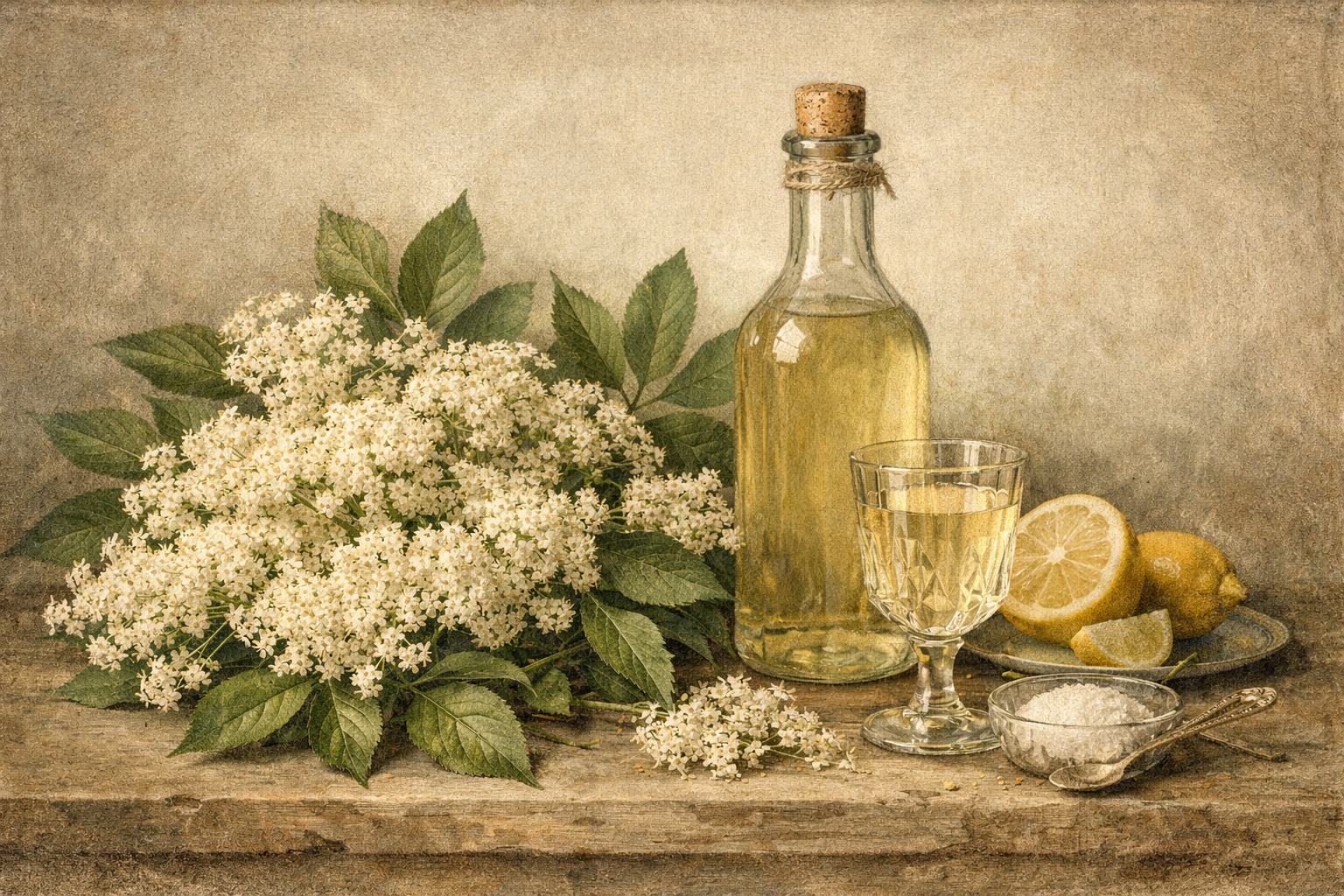
Brew a fragrant elderflower cordial from foraged blossoms, capturing the essence of early summer in a bottle.
~90 minutes · Season: beltane
## Elderflower Cordial
The elder tree (*Sambucus nigra*) has been called the medicine chest of the country people, and its creamy, fragrant flower heads — appearing in late May and June — are one of the great gifts of the hedgerow. Making elderflower cordial is a way of bottling the very essence of Beltane and early summer, preserving the scent of warm evenings and buzzing hedgerows for months to come.
The elder has deep roots in British folklore. It was considered a tree of the Otherworld, sacred to the Elder Mother — a spirit who dwelt within the tree and who must be asked permission before any cutting. "Old girl, give me some of thy wood, and I will give thee some of mine when I grow into a tree," runs the traditional charm. Elder wood was never burned on the hearth, for fear of inviting the fairies in.
In this workshop, you will learn to identify elder in flower, understand the best time and conditions for picking (dry, warm afternoons when the pollen is heaviest), and prepare a simple cordial using sugar, water, lemons, and citric acid. We cover the importance of sustainable foraging — never stripping a tree bare, always leaving plenty for the birds and the elderberry harvest later in the year.
The resulting cordial is golden, intensely floral, and utterly unlike anything you can buy. Diluted with cold water, it is the taste of an English summer. Mixed with sparkling water and ice, it becomes a drink fit for the Seelie Court. We will also discuss variations: adding rose petals for a Midsummer blend, or fermenting with wild yeast to produce elderflower champagne.